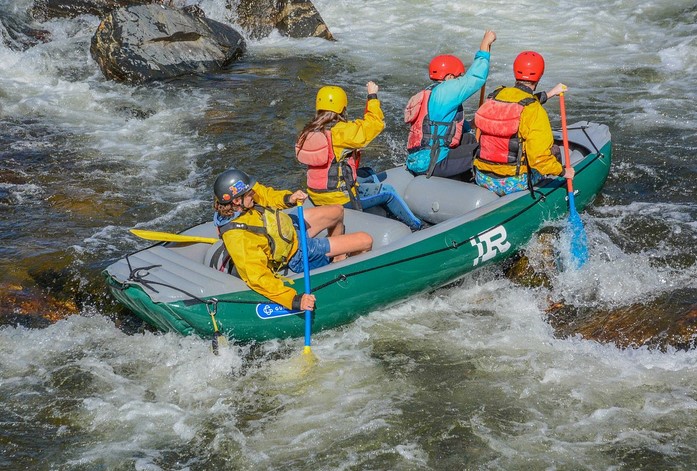
Picture this: You are sitting on the edge of an inflatable rubber raft, paddle held tight in cold-numbed fingers, staring down a wall of churning white foam. The roar of the river swallows every sound except for your guide’s sudden, sharp command: “Forward hard! Right side back!” Your heart hammers against your ribs, adrenaline floods your veins, and within seconds, you drop straight into the chaotic rapid.
If reading that made your pulse quicken, you aren’t alone. Having spent over a decade guiding and navigating some of the world’s most breathtaking whitewater circuits, I can tell you that nothing compares to the pure, unadulterated high of a river adventure rafting expedition.
However, for beginners and intermediate paddlers, stepping onto a wild river can feel overwhelming. How do you choose the right class of rapids? What gear actually matters versus what is just marketing hype? Let’s dive deep into the ultimate guide to river rafting, combining real-world river wisdom with actionable technical insights so you can take on your next adventure safely and confidently.
Understanding the Water: River Classes Explained
Before booking your first river adventure rafting holiday, you need to speak the language of the river. Rivers are graded using the International Scale of River Difficulty, ranging from Class I to Class VI.
Think of river classifications like ski runs: Class I is your gentle bunny slope, while Class V is a double-black diamond reserve for extreme pros.
+-------------+-----------------------+---------------------------------------+
| River Class | Difficulty Level      | Typical Characteristics               |
+-------------+-----------------------+---------------------------------------+
| Class I     | Easy                  | Fast-moving water with small waves    |
| Class II    | Novice                | Wide channels, clear passages          |
| Class III   | Intermediate          | Moderate, irregular waves; tight gaps |
| Class IV    | Advanced              | Intense, powerful water; fast moves   |
| Class V     | Expert                | Extremely long, violent rapids        |
| Class VI    | Extreme / Dangerous   | Unrunnable or life-threatening        |
+-------------+-----------------------+---------------------------------------+
Class I & II: The Warm-Up
-
Class I: Fast-moving water with light ripples. Ideal for scenic float trips and getting comfortable in the boat.
-
Class II: Clear channels with small, regular waves. You will need to maneuver occasionally, but the risk of capsizing is extremely low.
Class III: The Sweet Spot for Beginners & Intermediates
-
Characteristics: Moderate, irregular waves that can easily capsize an unprepared raft. You’ll navigate narrow passages and avoid submerged rocks.
-
My Insight: If you are new to the sport but looking for genuine excitement, Class III is your magic number. It delivers big splashes and technical paddling without requiring years of experience.
Class IV & V: Pure Thrill territory
-
Class IV: Intense, powerful, and fast. Requires precise maneuvering, quick reactions, and strong physical condition.
-
Class V: Violent, long, and complex rapids with significant hazards. Reserved for seasoned, highly trained paddlers.
Pro Tip: Never over-estimate your fitness or experience level. A Class IV river during high spring run-off (snowmelt season) can quickly surge into a terrifying Class V experience. Always check local water levels before booking!
Essential Gear: What to Pack vs. What to Wear
Over my ten-plus years on the water, the single biggest mistake I see beginners make is wearing the wrong gear. Cotton T-shirts and heavy denim jeans are your worst enemies on the river—once wet, they stay wet, leeching your body heat and causing hypothermia even on warm, overcast days.
1. Personal Protective Equipment (PPE)
-
PFD (Personal Flotation Device): This is not just a life jacket; it is your ultimate insurance policy. Ensure it is a Type III or V commercial whitewater vest fitted snugly around your torso.
-
Helmets: Non-negotiable for Class III rapids and above. It protects your skull from hidden riverbed boulders during an unexpected swim.
2. Technical Apparel: The Layering System
To keep your core temperature stable, think of technical river wear like insulating your home:
-
Base Layer: Synthetic fabrics (polypropylene, polyester) or merino wool. They wick moisture away from your skin.
-
Neoprene Wetsuit or Drysuit: If water temperatures drop below $60^\circ\text{F}\ (15^\circ\text{C})$, a wetsuit acts like a warm barrier, trapping a thin layer of water heated by your body.
-
Footwear: Leave your flip-flops at home! Wear closed-toe water shoes, booties, or sturdy sports sandals with heel straps and grippy rubber soles.
3 Technical Paddling Commands Every Rafter Must Master
When you are in the thick of a hydraulic drop, panic is your worst enemy. Your raft guide acts as the captain, but the paddle crew provides the engine power. Here are the three fundamental commands you must execute instinctively:
                  [ RAFT BOW (FRONT) ]
                 /                    \
        Left 1  (  [P1]          [P2]  )  Right 1
        Left 2  (  [P3]          [P4]  )  Right 2
                 \                    /
                  [ RAFT STERN (REAR) ]
                         [GUIDE]
-
“Forward All!”
-
Execution: Plant your paddle blade fully into the water near your toes, pull back using your core muscle group (not just your arms), and slice the blade out at your hip line.
-
Why it matters: momentum is stability in whitewater. If you stop paddling, the river takes control of the raft.
-
-
“High Side!”
-
Execution: When the raft hits an obstacle or a giant wave and begins to tilt dangerously, everyone immediately throws their body weight to the high side of the boat (the side lifting into the air).
-
Why it matters: This simple mechanical shift prevents the raft from flipping upside down (flipping) or getting pinned against rocks (wrapping).
-
-
“Take a Picture!” (Over-the-side Recovery)
-
Execution: If a swimmer falls overboard, lean over the side, grab the shoulder straps of their PFD, push them down slightly into the water, and use their buoyancy momentum to pull them back over the tube.
-
Top Destinations for Your First Whitewater Adventure
If you are ready to book your first or second river adventure rafting getaway, these handpicked spots offer world-class rapids, stunning scenery, and top-tier professional outfitters:
+-----------------------------------+--------------------+------------------------+-------------------+
| Destination                       | Best Season        | Average River Class    | Highlights        |
+-----------------------------------+--------------------+------------------------+-------------------+
| Snake River (Wyoming, USA)        | June to September  | Class II - III         | Grand Teton views |
| Ayung River (Bali, Indonesia)     | Year-round         | Class II - III         | Jungle gorges     |
| Zambezi River (Zambia/Zimbabwe)   | August to February | Class IV - V           | Victoria Falls    |
| Pacuare River (Costa Rica)        | May to December    | Class III - IV         | Rainforest fauna  |
+-----------------------------------+--------------------+------------------------+-------------------+
1. Ayung River – Bali, Indonesia
-
Ideal for: Absolute beginners, families, and intermediate adventurers looking for stunning tropical natural surroundings.
-
The Vibe: Carving through lush jungle gorges, past ancient carved stone walls and tumbling waterfalls, the Ayung offers continuous Class II-III action with gentle rest pools in between.
2. Snake River – Jackson Hole, Wyoming, USA
-
Ideal for: First-timers wanting classic alpine wilderness scenery.
-
The Vibe: Framed by the magnificent Grand Teton mountains, this iconic stretch gives you exciting Class III roller-coaster waves like Lunch Counter and Big Kahuna, alongside high chances of spotting bald eagles and moose.
3. Pacuare River – Costa Rica
-
Ideal for: Intermediates hungry for a multi-day rainforest expedition.
-
The Vibe: Consistently ranked among the top scenic rivers on Earth, the Pacuare winds through pristine primary rainforests, towering canyons, and dynamic Class III-IV technical rapids.
Hidden Hazards: Expert Safety Checklist
Every great river trip balances thrilling adrenaline with meticulous risk management. Beyond basic paddling skills, keep these subtle river dynamics in mind:
🚨 Hidden River Warning: Understanding Hydraulics & Strainers
The Defensive Swim Position
If you flip or fall out of the boat into swift current:
-
DO NOT try to stand up in fast-moving water deeper than knee-height. This prevents foot entrapment, where your foot gets wedged under a rock while the current pushes your body down.
-
Float on your back: Keep your toes pointed downstream, feet high near the surface, and head up so you can see where you are going.
-
Use your arms to scull: Steer toward calm water, an eddy, or the side of the boat when your guide extends a paddle or throw-rope.
Ready to Take the Plunge?
An adrenaline-pumping river adventure rafting holiday is more than just a quick getaway—it’s an empowering experience that reconnects you with nature’s raw forces, builds unbreakable camaraderie with your paddle crew, and leaves you with stories you’ll share for a lifetime.
Whether you start with a day trip down a scenic Class III run or embark on an epic multi-day wilderness journey, the river has a way of resetting your perspective like nothing else on land.
Over to You! Have you ever tackled a whitewater rapid before, or are you currently planning your very first river trip? Drop a comment below with your favorite river spot or the destination sitting at the top of your bucket list! Let’s talk whitewater!