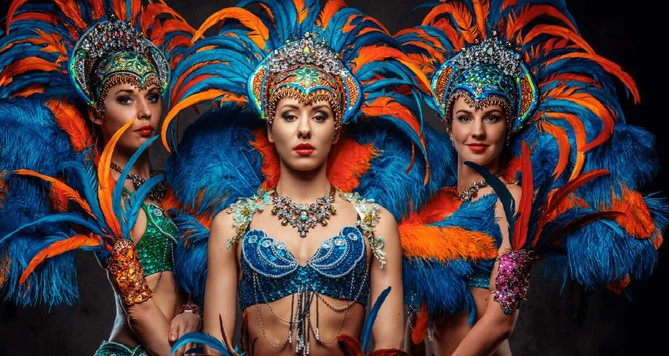
A wall of pure sound hit my chest before I even turned the corner onto Rio de Janeiro’s Avenida Marquês de Sapucaí. The synchronized thunder of 300 percussionists playing the surdo drums was so intense it literally altered my heartbeat. Suddenly, a sea of neon feathers, towering floats, and dancers moving at impossible speeds swept past me. I had spent months planning this trip, yet nothing prepared me for the sheer, coordinate chaos of a world-class celebration.
For many travelers, attending a massive international festival sounds like a dream, but the actual planning can quickly turn into a logistical nightmare. Between skyrocketing hotel rates, restricted street access, and safety anxieties, it is easy to relegate these bucket-list experiences to your social media feed.
But after ten years of embedding myself in global crowds, I can tell you that participating in cultural street carnivals is the ultimate way to witness a country’s raw, unfiltered soul.
Whether you are a festival rookie trying to survive your first crowd or an intermediate traveler looking to maximize your experience, this deep-dive guide will give you the technical blueprint to join the world’s greatest street parties safely and seamlessly.
The Anatomy of Celebration: More Than Just a Street Party
To the uninitiated, a major street festival looks like a spontaneous, chaotic gathering. In reality, modern cultural street carnivals are highly synchronized, multi-million-dollar cultural operations that blend centuries-old folklore with cutting-edge event management.
Think of a massive street carnival like a complex clockwork engine. The tourists see only the beautifully painted clock face moving smoothly, but underneath lies a massive network of interlocking gears—parade logistics, sub-district community schools, strict socio-religious traditions, and highly competitive scoring matrices.
The Power of Socio-Cultural Integration
Historically, carnivals served as a critical societal pressure valve. For a few brief days each year, rigid social hierarchies were flipped completely upside down.
The servant dressed as a king, the rich walked alongside the poor, and the entire community united through rhythm. When you step into a modern parade route, you aren’t just observing a performance; you are stepping into a living historical ritual of rebellion, resilience, and community identity.
Iconic Global Spectacles: Choosing Your Rhythm
Not all carnivals are built the same. Depending on your personal travel style, endurance level, and musical preferences, you should target festivals that match your specific travel profile.
+------------------------+-------------------------------+------------------------------------------+
| Carnival Hub           | Core Musical Genre / Style    | Technical Term to Know                   |
+------------------------+-------------------------------+------------------------------------------+
| Rio de Janeiro (Brazil)| High-tempo Samba Enredo       | Sambadrome (Dedicated runway arena)      |
| Trinidad & Tobago      | Soca, Calypso, & Steelpan     | Mas (Masquerade bands / Playing Mas)     |
| Venice (Italy)         | Classical Baroque Pageantry   | Volto (Traditional white plaster mask)   |
+------------------------+-------------------------------+------------------------------------------+
The Afro-Caribbean Powerhouses: Trinidad and Rio
If you crave high-octane energy, thunderous bass lines, and synchronized choreography, the Afro-descendant festivals of the Atlantic are your spiritual home.
-
Rio’s Samba Schools: In Brazil, carnival is a fierce, highly organized sport. The top tier schools spend an entire year preparing for their 80-minute run down the Sambadrome—a purpose-built parade stadium. Each school is judged on precise technical metrics, including their bateria (drumming section), theme execution, and float engineering.
-
Trinidad’s Soca Explosion: Heading to Port of Spain means trading the spectator stands for the actual asphalt. Here, the celebration centers around “Playing Mas” (masquerade). Travelers buy into specific Mas Bands, clothing themselves in ornate costumes to truck down the streets behind massive flatbed semi-trucks loaded with wall-to-wall sound systems pumping high-tempo Soca music.
The European Renaissance: Venice’s Silent Mystique
If the thought of sweaty crowds and loud bass trucks sounds overwhelming, Venice offers a stunning, low-tempo alternative.
The Carnival of Venice is an exercise in mystery and historical preservation. Instead of open-air dancing, the streets fill with participants wearing opulent silk gowns, heavy velvet cloaks, and hand-painted papier-mâché masks like the Bauta or Volto. The atmosphere here is quiet, theatrical, and deeply atmospheric, making it perfect for photography enthusiasts and slow travelers.
Technical Travel Metrics: Navigating the Logistics Like a Pro
Surviving and enjoying a major global carnival requires shifting your standard travel booking blueprint. Use these three data points to keep your trip on track.
The “Hub-and-Spoke” Accommodation Strategy
During peak carnival dates, hotels located directly on the primary parade lines command premiums of up to 400%.
Pro-Tip: Do not drain your entire budget on a frontline hotel room. Instead, look for accommodations located 3 to 5 transit stops away along a primary underground rail artery. Underground trains bypass the massive surface-level road closures that completely paralyze city taxi networks during street parties.
Understanding Bloquinhos vs. Official Parades
In cities like Rio or Salvador, there is a major structural difference between official ticketed stadium events and free street parties (bloquinhos):
-
The Bloquinhos (Street Bands): These are neighborhood-specific, mobile street parties that follow a small truck playing music. They are free, incredibly authentic, and highly chaotic.
-
The Sambadrome / Official Stages: These are access-controlled, heavily secured zones requiring pre-purchased tickets. For a beginner, balancing your itinerary with ticketed evening shows and casual morning street blocks offers the safest, most well-rounded experience.
Pro-Tips for Surviving the Street Grind
Over ten years of navigating massive international festivals has taught me that physical preparation is your real security blanket.
-
Wear Closed-Toe, Steel-Shank Sneakers: Ditch the sandals and flip-flops immediately. Street carnival floors are fields of broken glass, spilled liquids, and thousands of heavy boots stomping in unison. Protect your feet with durable, old sneakers you don’t mind throwing away after the trip.
-
Utilize a Triple-Lock Hydration Strategy: The combination of tropical heat, continuous dancing, and alcoholic beverages is a recipe for severe heat stroke. For every hour spent dancing in the sun, consume at least 500ml of water fortified with electrolyte replacement salts.
-
The Cross-Body Secret: Pickpocketing syndicates thrive in massive festival crowds. Never carry a backpack or keep your phone in your pocket. Use a slim, water-resistant fanny pack worn across your chest, tucked firmly beneath a light jacket or shirt.
Expert Advice: The Hidden Warning for Festival Newcomers
Here is a serious piece of operational advice that commercial booking sites will never share with you: Beware of fake costume distribution scams.
If you are traveling to Trinidad or Brazil with the intention of actively marching inside an official parade band, you will need to buy an official costume outfit (Abadá or Mas costume) months in advance through online portals.
Every year, hundreds of intermediate travelers arrive at local distribution warehouses only to realize they purchased vouchers from predatory, clone websites. The fake operators disappear with the money, leaving tourists stranded without parade credentials. Always verify that your costume supplier is directly accredited by the city’s official independent tourism league (such as LIESA in Rio) before wiring any funds abroad.
Join the Global Dance
When you strip away the commercial sponsorships and the tourist seating, cultural street carnivals stand as beautiful monuments to the shared human experience. Standing shoulder-to-shoulder with thousands of strangers, moving to a unified rhythm that has echoed across centuries, breaks down cultural barriers faster than any language app ever could. It is an exhausting, beautiful, and profoundly liberating experience that will fundamentally rewrite how you view the world.
Which global celebration speaks directly to your travel soul? Are you ready to dance behind the high-powered Soca trucks of the Caribbean, or do you want to wander among the mysterious, masked ballrooms of Venice? Let me know your thoughts in the comments below, and let’s start planning your entry onto the world’s greatest stages!