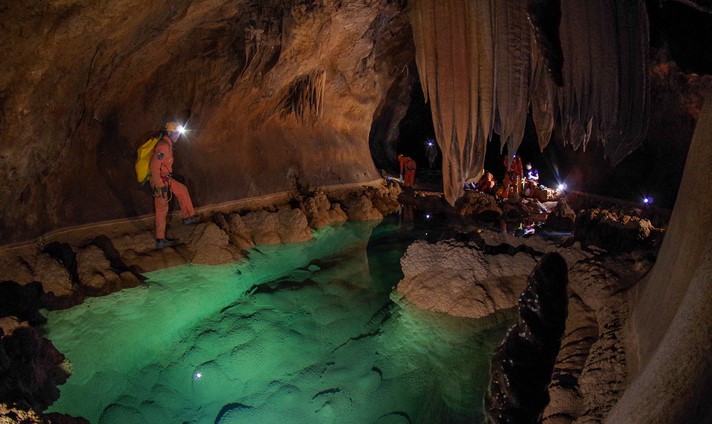
You switch off your headlamp, and instantly, a darkness thicker than anything you have ever experienced presses against your eyes. The pitch-black silence is broken only by the steady drip-drop of water echoing through a subterranean limestone chamber that took three million years to carve. When you click the light back on, towering stalagmites and shimmering crystal flowstones burst to life, revealing an alien world right beneath our feet.
Over my ten years of crawling, rappelling, and wading through underground networks from Vietnam to Slovenia, I have learned that caving—or speleology—is the final frontier of land exploration. While most travelers look up at mountains, true adventurers look down. Embarking on adventure cave explorations isn’t about reckless tight-squeeze crawling; it is about stepping into living geological time capsules using technical safety protocols, proper illumination, and environmental respect.
What Makes Underground Exploration Unique? (The Space Station Analogy)
To understand how subterranean environments test your mind and body, forget standard above-ground hiking trails. Think of stepping into a subterranean cave system like entering a alien space station:
-
Above-Ground Wilderness (Planet Earth): You rely on natural sunlight, open sightlines, ambient weather patterns, and easy GPS satellite connectivity for navigation and safety.
-
Underground Systems (The Subterranean Module): Zero natural light, zero satellite signals, constant 100% relative humidity, and permanent ambient temperatures. You are entirely dependent on life-support systems—your lamps, helmets, and thermal layers.
When you prepare for adventure cave explorations, you enter a delicate world where every step requires absolute spatial awareness and gear reliability.
Technical Elements of Underground Logistics & Caving Safety
Navigating underground ecosystems safely requires specialized equipment, spatial orientation, and an understanding of karst topography.
+-----------------------------------------------------------------------+
|                    SUBTERRANEAN CAVING ENVIRONMENT                    |
+-----------------------------------+-----------------------------------+
                                    |
          +-------------------------+-------------------------+
          |                                                   |
          v                                                   v
+-------------------+                               +-------------------+
| Illumination &    |                               | Karst Hydrology & |
| Power Redundancy  |                               | Flash Flood Traps |
+-------------------+                               +-------------------+
          |                                                   |
          +-------------------------+-------------------------+
                                    |
                                    v
+-----------------------------------------------------------------------+
|                 TACTICAL UNDERGROUND CAVING STRATEGY                  |
|    (3-Light Rule, Caving Helmet, Knee Pads, Non-Slip Boots)          |
+-----------------------------------------------------------------------+
1. The Critical “Three-Light Rule”
In total subterranean darkness, a failed light source is a life-threatening emergency. Professional cavers never enter a cave system without three independent, fully charged LED light sources. Your primary light attaches directly to your caving helmet, keeping your hands free for balancing over slick rocks.
2. Karst Topography and Cave Hydrology
Most major cave systems form in limestone or marble through chemical weathering by acidic groundwater—a geological formation known as karst. Understanding local hydrology is crucial: during heavy surface rainstorms, underground streams can swell rapidly, filling dry passages and trapping explorers inside.
3. Speleothem Conservation and Leave No Trace
The stunning rock formations inside caves—stalactites hanging from ceilings, stalagmites rising from floors, and delicate straw formations—grow by fractions of a millimeter each year. The oils on human skin permanently stop their growth and stain the rock. Cavers follow a strict rule: Take nothing but pictures, leave nothing but footprints, kill nothing but time.
Comparing Iconic World-Class Cave Destinations
Whether you want a scenic, beginner-friendly walking cave or an intense multi-day subterranean expedition, choosing the right system depends on your fitness and technical experience.
| Cave System & Country | Key Geological Features | Primary Exploration Style | Difficulty Level | Ideal Visiting Window |
| Phong Nha-Kẻ Bàng (Vietnam) | Massive river passages, underground jungles | Wading, swimming, multi-day trekking | Intermediate to Advanced | Dry season (February – August) |
| Postojna & Škocjan (Slovenia) | Giant underground canyons, historic bridges | Paved walkways, guided eco-tours | Beginner | Year-round |
| Waitomo Caves (New Zealand) | Bioluminescent glowworm canopy | Blackwater tubing, walking, abseiling | Beginner to Intermediate | Year-round |
| Mammoth Cave (USA) | Longest known cave system on Earth | Historical tours, crawlway passages | Beginner to Intermediate | Year-round |
Expert Advice: Pro Tips and Hidden Pitfalls from the Depths
Having logged hundreds of hours underground across major karst regions, here are essential field insights that standard guidebooks gloss over:
Pro Tip: Wear Synthetic Fabrics and Hard-Shell Knee PadsCaves are damp, muddy, and surprisingly abrasive. Never wear cotton or denim, which absorb moisture, cling to your skin, and accelerate hypothermia. Wear fast-drying synthetic overalls or thermal baselayers paired with flexible hard-shell knee and elbow pads to protect your joints during crawling sections.
Hidden Pitfall: The Danger of “Siphon” and “Sump” PassagesA sump is a cave passage that is completely submerged under water. Unexperienced adventurers often attempt to swim short underwater tunnels without professional dive gear or guide line markers. Never attempt to dive or swim through submerged cave sections—disorientation in muddy water can occur instantly.
Step-by-Step Caving Preparation & Safety Protocol
Use this practical checklist before descending into any subterranean system:
Step 1: Hire Certified Speleological Guides & Check Surface Weather
   │
   ▼
Step 2: Equip Helmet, Triple LED Light System, & Heavy Traction Boots
   │
   ▼
Step 3: Establish Surface Emergency Contact & Check-In Timeline
   │
   ▼
Step 4: Maintain 3-Point Contact on Slippery Karst Formations
-
Never Cave Alone: Always explore in groups of at least three to four people led by a certified local guide. If an injury occurs underground, one person stays with the injured party while two others exit together to alert emergency rescue teams.
-
Leave a Surface Flight Plan: Cell phones do not work underground. Always give a trusted person on the surface your exact cave entry point, planned route, and an absolute deadline for when surface rescue should be called if you haven’t checked in.
-
Inspect Your Footwear Traction: Cave floors are covered in slick clay, mud, and wet limestone. Wear high-top hiking boots with deep rubber lugs to prevent slips on treacherous ledges.
-
Master Spatial Orientation: Caves look vastly different when you turn around to exit. Periodically stop, turn around, and look back at the passage behind you so your brain registers visual cues for the return trip.
The Untouched Beauty Beneath Our Feet
Stepping into the underground world demands physical effort, focus, and technical respect, but the rewards are beyond words. Walking through cathedral-like limestone chambers, swimming across crystal-clear subterranean rivers, and standing in complete, absolute silence allows you to connect with the Earth in a way few ever will. When approached safely, adventure cave explorations will open your eyes to an astonishing world hidden just beneath the surface.
Have you ever explored a cave system or experienced total underground darkness? Which subterranean adventure is on your bucket list, or what questions do you have before your first caving trip? Drop your thoughts, questions, or personal experiences in the comments below—let’s keep the conversation going!


