The sharp crack sounded like a rifle firing right next to my ear. Before I could flinch, our expedition guide caught my eye and pointed toward the massive wall of neon-blue ice towering 100 feet above our zodiac boat in Svalbard. A chunk of ice the size of a city bus sheared off the face of the glacier, crashing into the frigid Arctic waters below and sending a rolling wave directly toward us.
For many travelers, the Arctic feels like an unreachable, monochrome void reserved exclusively for hardcore scientists and documentary filmmakers. But over my past ten years of exploring the ends of the Earth, I’ve watched this icy frontier become accessible to ordinary adventurers.
Stepping onto an active ice field through dedicated arctic glacier tours is easily one of the most transformative travel experiences you can have. However, navigating a landscape made entirely of moving, ancient ice requires a solid understanding of the environment.
Whether you are an absolute beginner dreaming of your first polar expedition or an intermediate hiker looking to upgrade your technical skills, this deep-dive guide will give you the exact blueprint to explore the frozen north safely.
The Anatomy of an Ice Giant: What You Are Actually Walking On
To the untrained eye, a glacier just looks like a massive heap of compacted snow. In reality, it is a living, slow-moving river of ice that reshapes entire continents.
Think of a glacier like a giant piece of memory foam layered over a mountain range. Under the immense weight of centuries of snowfall, the air bubbles are squeezed out, transforming soft snow into dense, crystalline glacial ice. Because this ice is so dense, it absorbs every color of the light spectrum except blue—which is why the deepest, oldest crevasses glow with an almost supernatural sapphire hue.
Understanding Glacier Movement and Dynamics
Glaciers are constantly flowing downhill due to gravity. This movement creates specific, highly technical features that you will encounter on arctic glacier tours:
-
Crevasses: Deep structural cracks that form in the upper layers of the ice as the glacier moves over uneven bedrock. They can be hundreds of feet deep and are often hidden by thin layers of fresh snow.
-
Moulin (Glacier Mills): A vertical, perfectly circular shaft worn into the ice by melting surface water. It acts like a giant drainpipe, funneling water from the surface straight down to the base of the glacier.
-
Moraines: Massive ridges of dirt and rock debris that the glacier scrapes off the mountainside and pushes along its edges, acting like a natural conveyor belt.
Top Polar Hotspots for Arctic Glacier Tours
The Arctic Circle spans multiple countries, each offering a completely distinct flavor of glacial exploration.
+------------------------+-------------------------------+------------------------------------------+
| Destination Region     | Primary Terrains Covered      | Signature Highlight                      |
+------------------------+-------------------------------+------------------------------------------+
| Svalbard (Norway)      | High-Arctic fjords & tidewater| Calving glaciers & polar bear territory  |
| Iceland                | Sub-Arctic ice caps & valleys  | Accessible ice caves & glacier hiking    |
| Greenland              | Massive continental ice sheet  | Kayaking among towering icebergs         |
+------------------------+-------------------------------+------------------------------------------+
Iceland: The Ultimate Gateway for Beginners
If you want to experience your first glacier hike without a multi-day sea voyage, Iceland is your best bet. Enormous outlet glaciers like Sólheimajökull are easily accessible right off the Ring Road.
Here, you can easily strap on a pair of crampons and spend a few hours exploring dramatic ice ridges, ash-layered formations from volcanic eruptions, and stunning crystal ice caves that form during the winter months.
Svalbard and Greenland: Deep Wilderness Expeditions
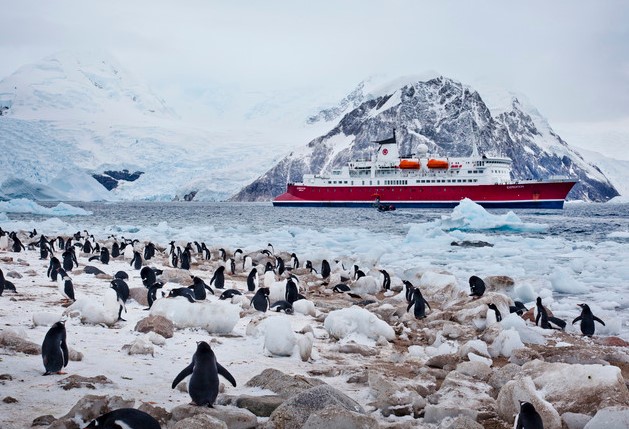
For those craving raw, untamed isolation, heading further north to Svalbard or Greenland is a must. These regions are home to tidewater glaciers—massive ice walls that terminate directly in the ocean.
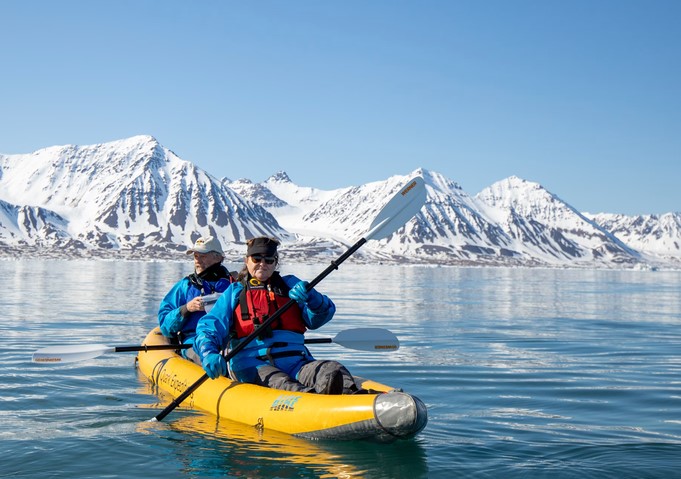
Tours here often combine zodiac boat safaris, high-altitude glacier trekking, and sea kayaking through fields of brash ice, offering a front-row seat to the dramatic process of glacial calving.
Mastering the Gear: Technical Tools for a Safe Trek
When you book a reputable glacier excursion, your guiding outfitter will supply the specialized safety hardware. However, understanding how this equipment functions is vital before you step onto the ice matrix.
-
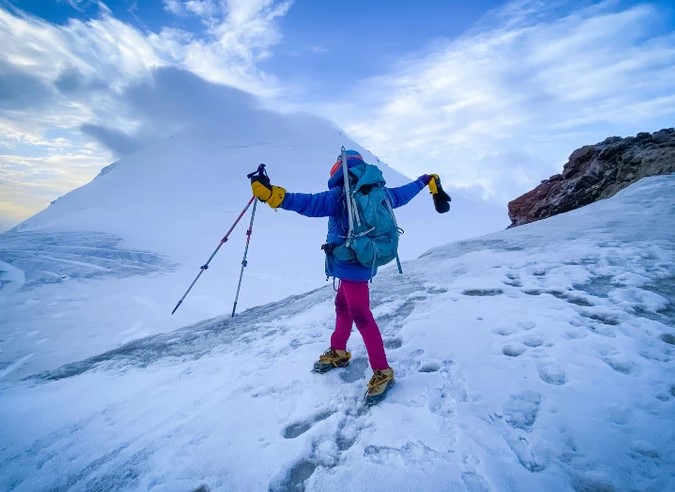
Steel Crampons: These are heavy-duty metal frameworks with sharp spikes that strap directly onto your hiking boots. They act like snow tires for your feet, biting into the hard, slippery blue ice and allowing you to walk up steep slopes without losing traction.
-
Technical Ice Axes: An ice axe isn’t just a prop for photos. It serves as a third leg for balance on uneven terrain, an anchor point for steep climbs, and a critical safety tool for self-arresting if you happen to slip on a slope.
-
Safety Harnesses and Ropes: When navigating high-risk zones or active ice fields, your group will be roped together. If one person slips into a hidden crevasse, the combined weight and anchor points of the rest of the team stop the fall instantly.
Pro-Tips for Surviving the Polar Microclimate
Over a decade of freezing my toes off in sub-zero wildernesses has taught me that staying warm on a glacier is a science, not a matter of luck.
-
Ditch the Cotton Completely: Cotton acts like a sponge, holding onto sweat and condensation. When you stop moving, that cold moisture will drop your body temperature immediately. Stick exclusively to a three-layer system: a merino wool base layer, an insulating fleece mid-layer, and a windproof, waterproof Gore-Tex outer shell.
-
Protect Your Eyes with Category 4 Sunglasses: Glacial ice acts like a massive mirror, reflecting up to 80% of UV radiation back at your face. Standard fashion sunglasses are not enough. You need technical glacier glasses with side shields to prevent a painful condition known as photokeratitis, or snow blindness.
-
Keep Your Batteries Warm: The intense Arctic cold will drain your smartphone and camera batteries in minutes.
My Personal Rule of Thumb: Store your phone and spare camera batteries in an inside zippered pocket closest to your body heat. Only take them out when you are actively shooting a photo, then tuck them right back in.
Expert Advice for Polar Explorers
Here is an insider warning that intermediate travelers often overlook: Never enter an ice cave during the summer months or without a certified local guide.
Ice caves are incredibly dynamic, ever-shifting structures. They are carved out by rushing meltwater during the warmer seasons.
As global temperatures rise, these caves become highly unstable. A cave that was perfectly safe to explore in January can easily collapse under its own weight by July. Always ensure your tour operator utilizes real-time thermal monitoring and physical safety testing before leading groups inside any subterranean ice structures.
Confronting the Changing Face of the North
Standing on a massive sheet of Arctic ice forces you to realize how fragile our planet truly is. Walking past markers showing where the ice stood just a decade ago is a sobering reminder of global climate shifts. Booking one of these incredible arctic glacier tours isn’t just about chasing an adrenaline rush; it is about bearing witness to one of the most beautiful, pristine, and rapidly changing ecosystems on Earth.
Are you ready to test your footing on the ancient blue ice of the frozen north? Would you prefer a beginner-friendly trek through Iceland’s accessible ice fields, or are you brave enough to cruise the remote, iceberg-laden fjords of Svalbard? Drop your thoughts in the comments below, and let’s get your polar expedition mapped out!