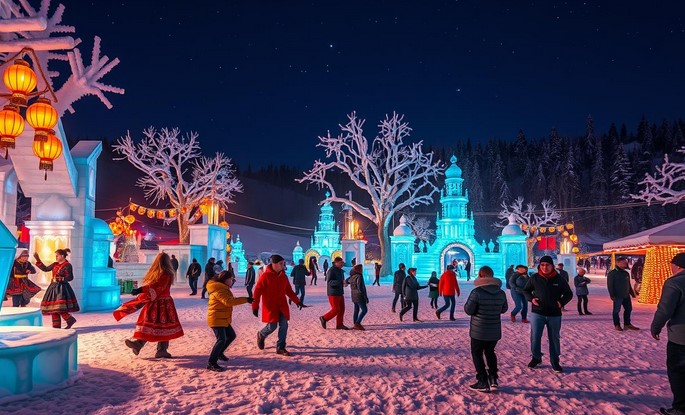
The sub-zero wind is biting your cheeks, your breath forms thick clouds of ice vapor in the dark, and your feet feel like two blocks of solid granite. Just as you are about to give up and retreat to your hotel room, a massive explosion of light shatters the alpine night. A stadium-sized firework illuminates an intricate, five-story palace built entirely out of glowing, crystal-blue glacial ice. Around you, thousands of people cheer, clinking steaming mugs of spiced mulled wine, completely oblivious to the freezing temperatures.
A few years ago, during my first major winter expedition to an alpine gathering in Hokkaido, I was completely unprepared for the reality of sub-zero crowds. I made the classic mistake of wearing heavy leather city boots and a fashionable jacket. By hour two, my toes were completely numb, and I spent the most beautiful part of the opening ceremony shivering inside a public restroom stall.
That frozen blunder taught me a lesson I have shared with readers over my ten-years as a travel blogger: the cold isn’t something to flee from—it is a canvas for spectacular human creativity.
Attending global winter mountain festivals allows you to see mountain cultures at their most vibrant, joyful, and authentic. Let’s look at how these high-altitude celebrations operate, where you need to go, and how to master the technical logistics of sub-zero festival survival.
The Cold-Weather Playground: The “Snow Globe” Analogy
To understand why mountain communities throw their biggest parties when the weather is at its most hostile, let’s use a simple analogy. Think of a standard summer music festival like a busy beach party. It is easy, warm, and highly relaxed, but it can occasionally feel predictable.
A high-altitude winter festival, on the other hand, functions like stepping directly inside a giant, highly engineered, living snow globe.
Instead of fighting the freezing alpine climate, these events turn ice and snow into the primary structural materials for art, architecture, and performance. The extreme cold acts as a natural preservative, keeping massive ice sculptures crisp, reflecting dazzling laser displays with pristine clarity, and forcing a unique, high-energy camaraderie among travelers huddled around outdoor fire pits.
Breathtaking Winter Mountain Festivals to Add to Your Bucket List
The global winter festival landscape has evolved far beyond basic ski-resort after-parties. Today, the most compelling alpine events fuse deep cultural heritage, architectural engineering, and extreme snow sports.
1. The Ice Architecture Masterclass: Sapporo Snow Festival (Hokkaido, Japan)
What started in 1950 with local high school students building six simple snow statues has transformed into a world-class exhibition of massive, ephemeral engineering.
-
The Scale: Every winter, teams from around the globe use heavy industrial earth-movers to haul thousands of tons of pristine mountain snow into the heart of the city, carving highly detailed replicas of historic castles and pop-culture icons that stand over 50 feet tall.
-
The Insider Vibe: The festival paths feature bustling pop-up seafood stalls serving steaming bowls of Hokkaido crab ramen and hot sake, providing the perfect physical fuel to keep you walking through the snowy avenues.
2. The High-Altitude Electronic Oasis: Tomorrowland Winter (Alpe d’Huez, France)
For music enthusiasts who prefer their heavy bass beats paired with pristine alpine slopes, this high-altitude gathering takes over the French Alps at an elevation of over 6,000 feet.
-
The Experience: This festival seamlessly merges premium skiing and snowboarding infrastructure with massive, custom-designed stages dropped directly onto the ski runs, allowing you to dance in your ski boots surrounded by panoramic, snow-capped peaks.
-
The Technical Setup: The festival utilizes advanced RFID wristband systems and mountain-optimized audio arrays that deliver crisp, pounding sound across vast, open alpine bowls without triggering environmental acoustic hazards.
3. The Mystic Mountain Lanterns: Yi Peng & Taiwan Winter Festivals (High-Altitude Regions)
While low-land light festivals are common, heading up into the misty, mountainous regions of East Asia during the winter solstice reveals a deeply spiritual celebration.
-
The Visuals: Thousands of biodegradable paper lanterns lit by small candles are released simultaneously into the crisp, pitch-black mountain air, creating a floating river of light that drifts slowly over the jagged forest ridges.
+-------------------------+-----------------------------------+-----------------------------------+
| Festival Name & Location| Primary Event Profile / Style     | Essential Gear Requirement        |
+-------------------------+-----------------------------------+-----------------------------------+
| **Sapporo Snow Fest**   | Massive ice & snow architecture   | YakTrax / Boot traction spikes    |
| **Tomorrowland Winter** | Electronic music & alpine sports  | Polarized ski goggles (UV 400)    |
| **Pingxi Lantern Fest** | Spiritual light releases & culture| Waterproof shell & thermal layers |
+-------------------------+-----------------------------------+-----------------------------------+
Technical Survival: Defeating the Sub-Zero Elements
Enjoying these celebrations requires strict adherence to technical clothing geometry. The moment you stand still to watch a performance or light show, your body stops generating heat, making you highly vulnerable to rapid cooling.
-
The Boot Insulator Trick: Your feet lose heat directly into the frozen pavement or packed snow via conduction. Never wear tight boots; compresssing your feet cuts off blood circulation, speeding up numbness. Choose boots one size larger to allow room for thick, heavy merino wool loops and a pocket of insulating air.
-
Managing Your Thermal Regulating Core: Avoid heavy, non-breathable fabrics like cotton or heavy canvas. Use high-loft fleece mid-layers or compact synthetic down jackets underneath a dedicated windproof shell to lock in your natural body heat while letting internal sweat vapor escape.
-
The Power Bank Defense: Biting cold temperatures cause the chemical reactions inside smartphone and camera lithium-ion batteries to slow down dramatically, dropping your battery indicator from 80% to zero in a matter of minutes. Keep your electronics tucked inside an inner zippered pocket close to your chest to use your own body heat to keep the cells active.
Insider Insights: The Hidden Traction Trap
💡 Tips Pro: The “Black Ice” Pavement Warning
The single most common injury at winter mountain celebrations isn’t skiing accidents—it is slipping on compressed walkways. As thousands of festival-goers walk over the same snow paths, the heat from their boots melts the top layer, which instantly refreezes into an invisible, glass-slick layer of black ice. Before entering the festival perimeter, purchase a cheap pair of slip-on rubber microspikes or traction nets that wrap around your normal winter boots.
Over my decade auditing winter travel destinations, the biggest pitfall I see intermediate travelers stumble into is booking accommodations too late. Winter mountain towns have highly restricted geographic footprints.
If you stay at a cheap hotel located miles away from the main festival hubs to save money, you will face complex nighttime transportation challenges, missing local train schedules or paying exorbitant mountain taxi fees when temperatures hit their absolute lowest. Prioritize staying within walking distance of the central event zones.
Embracing the Magic of the Alpine Winter
Stepping out of your comfort zone to join a joyful crowd in a freezing, high-altitude mountain valley is an incredibly life-affirming experience. It completely shatters the winter blues, converting a time of year often associated with staying indoors into a dynamic showcase of human resilience, art, and community.
When you prepare for winter mountain festivals with the proper technical gear, the harsh climate stops feeling like a barrier and becomes an unforgettable playground.
You return home with a wind-kissed face, a clear mind, an upgraded cold-weather survival skillset, and the beautiful memory of watching human warmth, art, and music completely melt away the freezing chill of the mountains.
Over to You!
Have you ever attended a festival in the middle of a snowy winter landscape, or do you usually prefer sticking to warm summer destinations? Which alpine celebration sounds like your absolute dream vacation? Drop a comment below and share your thoughts—let’s get your gear list dialled in for the snow!