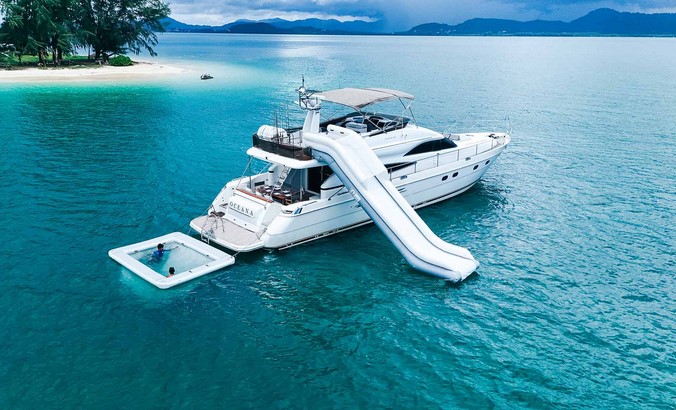
Picture this: You are waking up to the gentle lap of the Mediterranean against a carbon-fiber hull. There are no breakfast buffet lines, no fighting for a pool lounger, and the only neighbor you have is a curious sea turtle. Your captain has already charted a course for a hidden cove in Bonifacio that is inaccessible to the giant cruise ships looming on the horizon.
In my decade of navigating the world’s most prestigious coastlines, I’ve seen many travelers shy away from luxury yacht charters because they believe it’s a lifestyle reserved exclusively for tech moguls or movie stars. However, here is a statistic that might surprise you: when you break down the cost of a high-end villa, private transport, and fine dining for a group of eight, a private charter often becomes a financially logical alternative. The real challenge isn’t the price—it’s navigating the complex technical jargon of the maritime world to ensure you aren’t overpaying for a “floating antique.”
Understanding the Anatomy of a Charter
To the uninitiated, a yacht is just a big boat. But in the industry, choosing the right vessel is like selecting a tailored suit. It has to fit your specific “movement” on the water. For beginners, the choice usually boils down to three primary hulls:
-
Motor Yachts (MY): Think of these as the luxury SUVs of the ocean. They are fast, stable, and offer massive internal volume for cabins and salons.
-
Sailing Yachts (SY): For the purists. These provide the romantic, traditional experience of “heeling” (leaning) with the wind, though they offer less living space.
-
Catamarans: These are the penthouse apartments of the sea. With two hulls instead of one, they offer incredible stability (perfect if you get seasick) and a shallow draft that lets you park right on the beach.
My personal insight? If you are a first-timer, go for a power catamaran. You get the stability of a stationary building with the 360-degree views of a luxury lighthouse.
The Technical Side: Decoding the Charter Contract
When you book luxury yacht charters, you aren’t just paying for a rental; you are entering a maritime agreement. Understanding the “Plus Expenses” model is crucial to avoid “invoice shock” at the end of your trip.
1. The APA (Advance Provisioning Allowance)
Most luxury charters operate on a base rate plus expenses. The APA is typically 25% to 35% of the charter fee. This is a “buffer fund” used by the crew to buy your preferred champagne, fuel the engines, and pay for dockage fees.
Think of the APA like a debit card for your boat. If you spend less than the allowance, you get every cent back in cash before you disembark. If you drink vintage Bordeaux every night, you might need to top it up.
2. The MYBA Terms
Most reputable brokers use MYBA (Mediterranean Yacht Brokers Association) contracts. These are the gold standard for consumer protection. They clearly define the responsibilities of the crew, the insurance coverage, and the cancellation policies. If a broker suggests a “handshake deal” or a non-standard contract, walk away.
Top Destinations for Luxury Yacht Charters
The world is 71% water, but for luxury, three regions stand above the rest.
The French Riviera and Amalfi Coast
The “glamour” circuit. This is where you go to be seen. Technically, these waters are easy to navigate, but the Mooring Fees can be astronomical in places like St. Tropez. I recommend visiting in the “shoulder months” (June or September) to avoid the crowd while still enjoying the warmth.
The Exumas, Bahamas
If you want water so blue it looks photoshopped, this is it. The Bahamas are perfect for luxury yacht charters involving “water toys.” Because the water is shallow, these charters often feature slides, jet skis, and “seabobs” (underwater scooters).
The Adriatic (Croatia)
With over a thousand islands, Croatia is a navigator’s dream. The water is deep and clear, and the Wind Patterns (like the Mistral) are predictable, making it a fantastic spot for those who want to try a sailing yacht without the fear of rough Atlantic-style swells.
Expert Advice: The Crew is More Important than the Boat
I’ve stayed on $50 million megayachts with a grumpy crew and $500,000 catamarans with a world-class crew. The latter was always the better vacation.
Tips Pro: When you receive a “Yacht Brochure” from a broker, look past the gold-plated faucets. Ask for the Crew Profile. You want a chef whose CV matches your palate and a captain who loves “off-the-beaten-path” exploration. A great crew acts like a 24/7 concierge, dive master, and private chef rolled into one.
Always check the “Year of Last Refit.” A yacht built in 2015 that was refitted in 2024 is often in better technical shape than a yacht built in 2020 that has been neglected. Saltwater is corrosive; “freshness” matters in the engine room as much as in the galley.
Scannable Checklist: How to Plan Your First Charter
-
Define Your Group: Yachts have strict “Guest Limits” (usually 12 guests due to international maritime safety laws).
-
Pick Your Vibe: Do you want a “Floating Party” or a “Wellness Retreat”? This dictates the type of crew you need.
-
Review the Preference Sheet: This is a 10-page document where you list everything from your favorite brand of sparkling water to your allergies. Be honest. If you hate cilantro, this is the place to say it.
-
Understand the Tip: In the charter world, a gratuity of 10% to 20% of the base charter fee is customary. It is usually handed to the captain in an envelope at the end of the trip to be split among the crew.
The Impact of Your Voyage: Sustainable Sailing
Modern luxury yacht charters are increasingly moving toward “Green Tech.” When booking, ask about Hybrid Propulsion or Water-Making Systems that eliminate the need for single-use plastic bottles. Many new yachts use “Dynamic Positioning” (holding the boat in place via GPS) instead of dropping anchors, which protects fragile coral reefs and seagrass meadows.
Conclusion: Setting Your Own Course
The beauty of a yacht charter is the death of the “schedule.” If you love a particular bay, you stay for another night. If you hear about a local festival on a nearby island, you pull up the anchor and go. It is the ultimate expression of travel freedom, backed by the safety of professional maritime expertise.
If you could wake up anywhere in the world tomorrow morning, which coastline would you want to see through your porthole? Have you ever considered a boat as your “hotel,” or does the open sea still feel a bit daunting? Let’s discuss your nautical dreams in the comments below!

