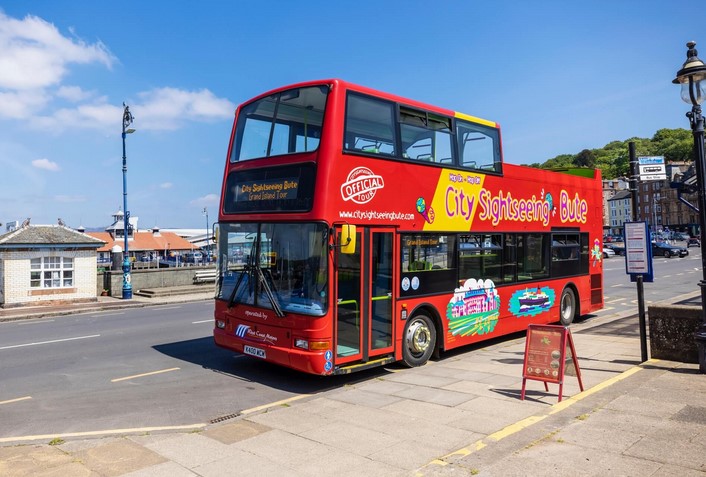
You’ve just landed in a dream destination—Rome, Tokyo, or perhaps Paris—and within three hours, you’ve already dropped $100 on a mediocre lunch and a “skip-the-line” ticket that actually had a forty-minute wait. It’s the classic traveler’s tax. Most people believe that to truly “see” a city, you need a sprawling budget and a private guide, but the data tells a different story. In major global hubs, nearly 70% of the most culturally significant sites are either free or accessible for the price of a local bus ticket.
Over the last decade, I’ve navigated the back alleys of Hanoi and the shimmering boulevards of Vienna. I’ve learned that budget city tours aren’t about deprivation; they are about optimization. When you strip away the air-conditioned tour buses and the “tourist menu” restaurants, you finally start to see the city’s true pulse. If you’re ready to stop being a “visitor” and start being an “explorer,” let’s dive into the technical art of high-impact, low-cost urban discovery.
The “Local Lens” Theory: Why Budget Beats Luxury
Think of a city like a massive, complex clockwork. A luxury tour takes you to look at the clock’s face—the shiny gold hands and the Roman numerals. A budget, self-guided approach takes you behind the gears. You see how the city breathes, how the locals commute, and where the real flavor hides.
By opting for budget city tours, you engage in what I call “Active Exploration.” Instead of being a passive passenger, you are the navigator. This shift in perspective forces you to learn the layout, understand the social etiquette, and discover the “interstitial spaces”—those magical spots between the landmarks that tour buses simply drive past.
Mastering the Logistics of Budget City Tours
To pull off a world-class city tour on a shoestring, you need to understand the technical infrastructure of your destination.
1. The Power of “Intermodal” Transport
Don’t just look for a bus. Look for the city’s integrated transport network. In cities like London or Singapore, the “tap-and-go” system with a credit card automatically calculates the lowest possible daily fare (fare capping).
-
The Insight: I always research the “Commuter Lines” rather than the “Tourist Loops.” In Venice, the #1 Vaporetto (water bus) gives you the same Grand Canal views as a $100 gondola for about $8.
2. Free Walking Tours: The “Tip-Based” Economy
Almost every major city now hosts “Free Walking Tours.” These are usually led by history students or passionate locals.
-
The Technical Edge: These guides work for tips, meaning their “performance metrics” are tied directly to your satisfaction. You get a high-energy, accurate historical overview for whatever you feel it’s worth—usually a $10-$15 tip is standard and vastly cheaper than a $60 commercial walking tour.
3. Digital Cartography and Offline Layers
Your smartphone is your most valuable technical tool. I never arrive in a city without downloading the Offline Maps for that region.
-
LSI Context: Use apps like Citymapper or Maps.me to identify pedestrianized zones and public transit hubs. This ensures you don’t waste money on data roaming while trying to find a hidden courtyard or a local market.
Strategic Timing: The “Off-Peak” Advantage
If you want to maximize budget city tours, you have to master the “shoulder hours.”
-
The Museum “Late Night”: Many world-class museums (like the Louvre or the British Museum) offer free or heavily discounted entry on specific evenings.
-
The “Lunch Set” Strategy: In high-cost cities like Tokyo or Paris, “Gourmet Dining” is accessible if you go at noon. Most Michelin-rated or high-end spots offer a Prix Fixe (fixed price) lunch menu that is 50% cheaper than their dinner service. Same kitchen, same chef, half the price.
💡 Pro Tip: The “Reverse Commute” Secret
When scouting for a base of operations, look for accommodation that is 3-4 stops away from the city center on a major metro line. You’ll save up to 40% on lodging costs, and you’ll find “neighborhood” prices for coffee and groceries. Just ensure you are near a high-frequency transit corridor so you don’t spend your “savings” on late-night Ubers.
Where to Find the Best Value City Immersions
While New York and London are notoriously expensive, some global cities are built for budget city tours.
-
Lisbon, Portugal: With its iconic yellow trams and “Miradouros” (free public viewpoints), Lisbon is a masterclass in affordable urban beauty. The technical hack here is the Lisboa Card, which includes all transport and dozens of museum entries.
-
Taipei, Taiwan: This is a budget traveler’s paradise. The street food culture (Night Markets) provides five-star flavors for $5, and the city is surrounded by “Free-Entry” hiking trails accessible by the MRT.
-
Berlin, Germany: Much of Berlin’s history is visible on the streets. From the East Side Gallery to the Memorial to the Murdered Jews of Europe, you can do a 10-hour “History Deep-Dive” without spending a single Euro on tickets.
The Technical Gear of an Urban Explorer
Even on a budget, you need “Technical Enablers” to keep your day efficient and comfortable.
-
RFID-Blocking Minimalist Wallet: Cities are high-density areas. Protect your digital data while keeping your pockets light.
-
Collapsible Water Bottle: In many European and Asian cities, “Public Fountains” provide high-quality drinking water. Buying bottled water in a city is a $5-a-day “beginner mistake” you can easily avoid.
-
Portable Power Bank: Between GPS, transit apps, and photos, your battery will be under heavy load. A 10,000mAh PD (Power Delivery) bank is the industry standard for a full day of urban trekking.
Avoiding the “Budget Traps”
There is a difference between “Cheap” and “Value.”
Beware of the “City Pass” Overbuy. Many cities sell a 72-hour “All-Inclusive” pass for $150. If you don’t plan on visiting three museums a day, you are overpaying. Calculate the individual entry fees for your “Must-See” list before buying. Often, the “Free Days” or “Combo Tickets” available at the door are a better technical deal for intermediate travelers.
Scannable Budget City Tour Checklist
-
Connectivity: Download an eSIM (like Airalo) before you land. It’s 90% cheaper than international roaming.
-
Currency: Always choose “Pay in Local Currency” at ATMs and card machines to avoid Dynamic Currency Conversion (DCC) fees.
-
Dietary: Visit a local supermarket (Monoprix, Tesco, Seven-Eleven) for “Grab-and-Go” breakfast and snacks.
-
Walking: Wear merino wool socks. They are antimicrobial and prevent blisters during 20,000-step city days.
Conclusion: The City belongs to the Curious
Budget city tours are not about skipping the good stuff; they are about skipping the fluff. When you navigate a city on your own terms, using the same trains and eating at the same stalls as the people who live there, you gain a sense of “Place” that no luxury tour can buy.
The most inspiring moments I’ve had in cities—a secret jazz session in a basement in Prague, a sunset over the rooftops of Istanbul—didn’t cost a dime. They just required a little bit of research, a comfortable pair of shoes, and the willingness to turn down a side street.
Which city has always felt “too expensive” for your budget? Or do you have a secret “free” spot in your favorite city that the guidebooks missed? Let’s swap secrets in the comments below!